Walk down any street in Saigon, and you’ll be greeted by a waft of delicious meat caramelising on an open grill. Mums or dads with their rugrats slurp bowls of hot pho at 7 am, or tuck into a quick banh mi from a street cart. By evening, the streets are buzzing with food carts, scooters, and hungry diners.
If you’re coming to Saigon, the best thing you can do here is eat.
Vietnamese food has blown my mind on many occasions! From flavour combos to some surprising textures and more freshness than I’ve seen anywhere else in the world, it completely expanded my knowledge of what’s possible with food. Before I moved to Ho Chi Minh City, I didn’t really know much about the cuisine beyond banh mi and pho, but that’s merely a layer of the onion.
In addition to my own curiosity and wanderings through the city, I learnt a lot about local cuisine from my amazing teaching assistant, Ms Uyen, who introduced me to many of these dishes. Each week, she’d surprise me with something new, a homemade breakfast, snacks, or full on lunch that she’d cooked from scratch. Like many Vietnamese, food was her love language, and she set the bar high for what to expect at restaurants.

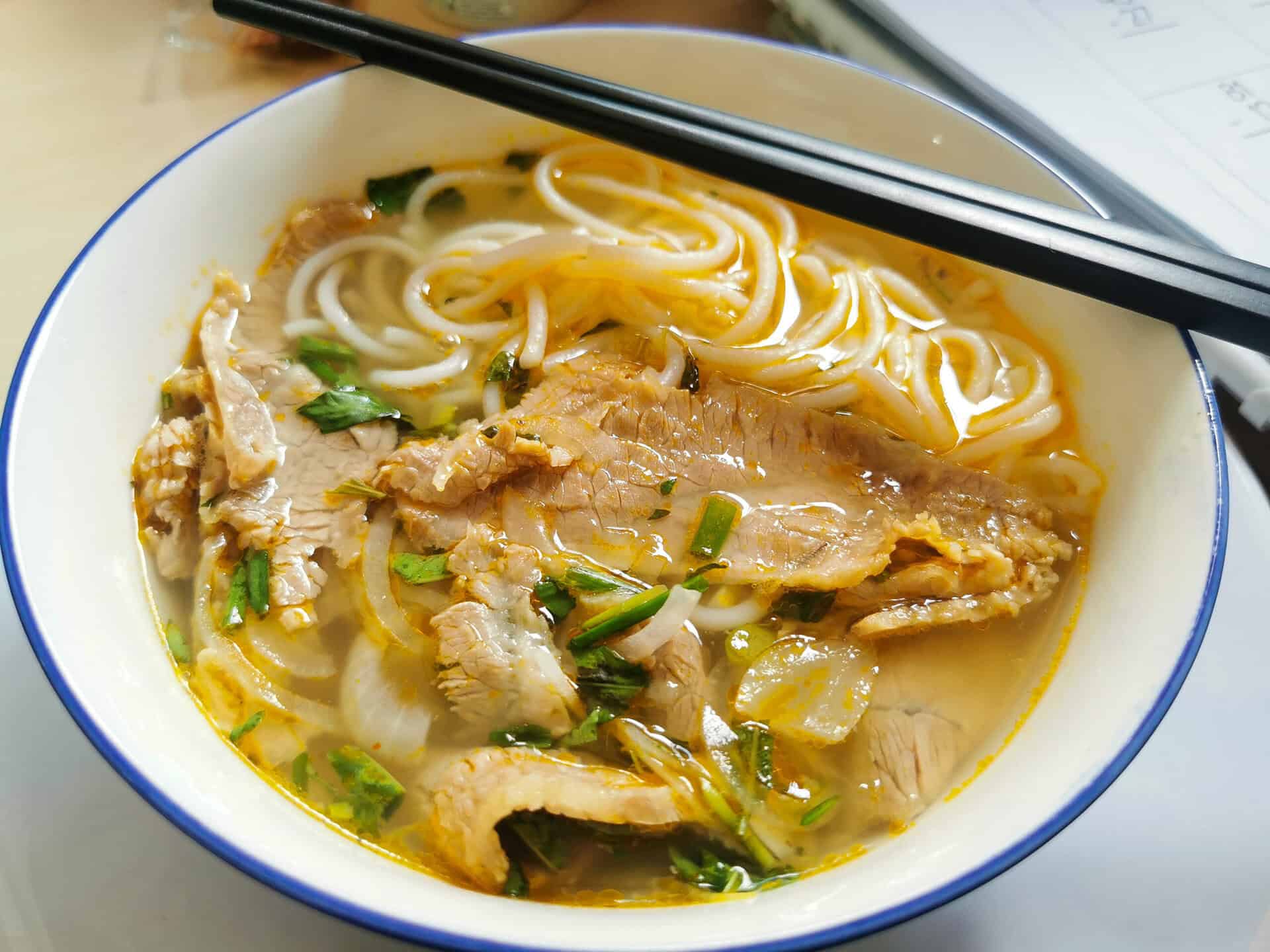
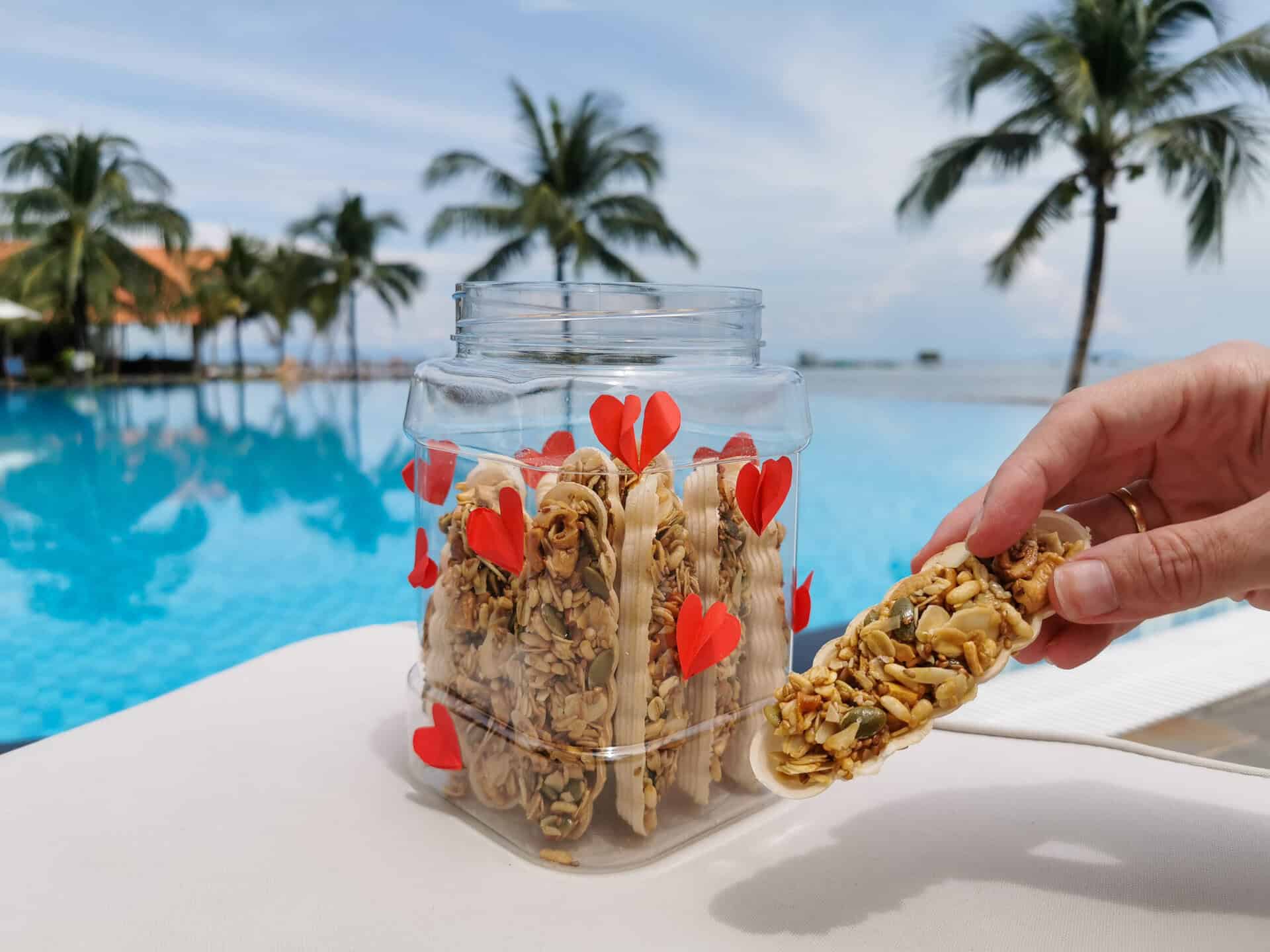
What I have here for you is a guide to 10 local dishes I’ve loved most, with a couple that specifically originated in the south. For each one, I’ve included tried-and-tested places where you can find it in the city.
Most are inside humble, casual restaurants that may not look like much, but this is where you find the best local food. Seriously, it doesn’t really get better than food prepared by Auntie, who has been making the same dish, day in and day out for decades, with recipes passed down.
Enjoy! x
Map of the Eateries
All the restaurants mentioned in this guide are pinned on this map for easy navigation – just tap the top-right icon to use it on the road with Google Maps, or save it for offline access.
If you’re short on time or want a benchmark for what a good version of each dish should be, use it at your leisure. However, there are heaps of places to enjoy each one across Saigon. If somewhere is far from you, try Googling your local one, or if you’re in the mood to raw-dog it, see what smells good out on a walk. Busy gaffs with a number of locals eating there are usually a good sign that the food is good and priced well.
Also, don’t rely too heavily on Google reviews. Sometimes they’re self-written (check for fake profiles with only one review to their name), or people are asked to leave one in exchange for a free dessert.
Okay, let’s get cracking with the goodies.
10 Delicious Vietnamese Foods to Try in
Ho Chi Minh City
1. Cơm Tấm – a Saigon staple
If there’s any meal that’s most synonymous with Saigon, many people will tell you that cơm tấm would be it. You can often smell the succulent grilled pork caramelising when you’re out and about town, which makes you question your pre-arranged dinner order. It can be eaten at any time of day, although the egg addition makes it a perfect brunch meal.
What is cơm tấm?

Cơm tấm is a comfort plate of beautifully marinated grilled pork loin, broken rice (basically, short rice that got fractured during the milling process- perfect for soaking up the meat juice), and a delicious braised egg meatloaf (with wood ear mushrooms and glass noodles; it tastes like a well-seasoned frittata). It’s paired with cucumber and pickled veggies to freshen the dish, and it’s served with a side of nước mắm* for you to pour over it (*a delicious, sweetened fish sauce, which I don’t find very fishy).
The dish comes with a side of hot, well-seasoned canh soup (a clear and peppery broth), which is typically served with drier dishes like this. I drank mine up before the food hit the table, but you can pour it over your rice to give it more moisture if needed.
Where to get your mouth around it 🥢
- Tiem Com 67 Tam
99/1B Vo Van Tan (District 1) – MAP

This one is tucked down an alley in a well-trodden part of D1, but it’s a chain of joints across the city. It was busy with locals eating when we came, on lunch break from the office and uni, with good vibes. The service was very friendly; our server spoke English well, and the restaurant had indoor seating with AC. Loved this som tom.
2. Bánh Cuốn – a brekkie treat
Hailing from Northern Vietnam, bánh cuốn is typically eaten for breakfast and it’s one you should make an effort to try in Vietnam. Due to its delicate nature, it wasn’t something that was introduced to me by Ms Uyen, nor was it something that I paid attention to, until recently. When I saw an Insta video of street vendor making the dish, and heard how delicious it was, I knew I had to eat it before I left. And then I was kicking myself for not trying it sooner.
What is bánh cuốn?

There is nothing else in the east or west I’ve tried that’s quite like this dish. However, I’d probably best describe it as this: If a delicate dumpling had a love child with a silken, savoury crepe, banh cuon would be it. Even fussy eaters, I think, would find it hard not to love it.
Bánh cuốn is a fermented rice batter that’s steamed over a hot plate into a thin crepe. Then, tasty marinated pork and sliced wood-ear mushrooms are spooned on top, and it’s rolled into a crepe shape. The dish we tried was paired with slices of Vietnamese sausage and pieces of crunchy, fried mung bean cake, topped with bean sprouts and basil for freshness. The sides with it are nuoc cham (sweetened fish sauce), and I’d recommend spooning some chilli on top too.
Where to get your mouth around it 🥢
- Bánh cuốn Hồ Con Rùa
6B Công trường Quốc Tế – MAP

If you copy the address into Grab, it’s likely that Cheese Pasta will come up instead- just call it there, as it’s right next door. The eatery is down a small alley with a couple of other joints (one in front selling Bun Riu Cua).
There are only a few tables, on small plastic chairs. It was busy with locals grabbing a quick breakfast, and the lady and son running it are so lovely. Just ask for the number of dishes you want, and they’ll prepare them fresh on the spot. Watching the skill that goes into preparing the batter is masterful. On the wall is a poster of a delicious mulberry juice on ice that I’d highly recommend to wash it down. Open until 1 pm.
3. Bột chiên – a comforting fried omelette
This was one of the first local dishes I tried in Saigon, and there’s a lot to love. It makes for a tasty breakfast, lunch or afternoon comfort food.
What is bột chiên?

I would best describe this dish as a Vietnamese version of a Spanish omelette. Except it’s cooked in about 5 minutes and uses rice flour cakes instead of potatoes, which are fried until they’re satisfyingly crisp.
After the cakes are fried off on a grill, they’re mixed with eggs and topped with the green part of spring onions. It’s accompanied by a sweet rice vinegar and soy sauce dressing, and topped with semi-pickled young pawpaw to freshen up the dish. Chilli paste is given on the side. It’s a smashing meal that doesn’t photograph well, but we all know it’s about the flavs anyway.
Where to get your mouth around it 🥢
- Quan 249
224 Võ Văn Tần, Bàn Cờ – MAP

This is the place I first ate bột chiên. It’s a simple local eatery run by a lovely family, and it was cool to watch her preparing it at the front of the store. Everything was fresh, and the place was clean. I also liked that she cooked it on a flat grill instead of a wok- I’ve had it in other places that use a lot of oil, and it makes the dish more naughty, but this one wasn’t. Tip: If coming for breakfast, make sure you get here before 11:30, as I think they close for lunch.
4. Bún Chả – totally addictive kebabs
Not long after I first moved here, a taxi driver asked if I liked Vietnamese food. I said I love it. Then he asked what dishes I like, and the first thing I said was bún chả Hà Nội, to which he replied, “Ugh, I don’t like food from Hà Nội. I like food from Ho Chi Minh!” Lol. There’s a kind of rivalry, and a very similar version of this dish in Saigon (BTN, coming up soon).
Bun cha is another dish I ate pretty early on in Saigon, and because there’s a banging eatery near home, it became one of the local meals I ate more regularly. It’s easy to fall in love with it as a Westerner because the main component is familiar and delicious- the humble, juicy meat kebab.
It’s also the dish that Barack Obama tried with Anthony Bourdain when he came to Vietnam and was famously photographed.
What is bún chả?

Bún chả is a bowl of brilliance. Served in it are some beautiful coal-grilled pork patties (that you’ll probably smell of when you leave), slices of thin grilled pork belly that have succulent charry edges, in a slightly sweet, moreish warm broth (diluted fish sauce with sugar, lime juice, vinegar, stock, crushed garlic, chilli, and more).
It comes with rice vermicelli noodles on the side, which you plonk in a portion at a time into your sauce, along with fresh herbs and optional chilli. This marriage is one I’m sure you’ll be loyal to as well.
Where to get your mouth around it 🥢
- Bà Thảo Bún chả gia truyền Hà Nội
64 Đ. Nguyễn Cừ, Thao Dien – MAP
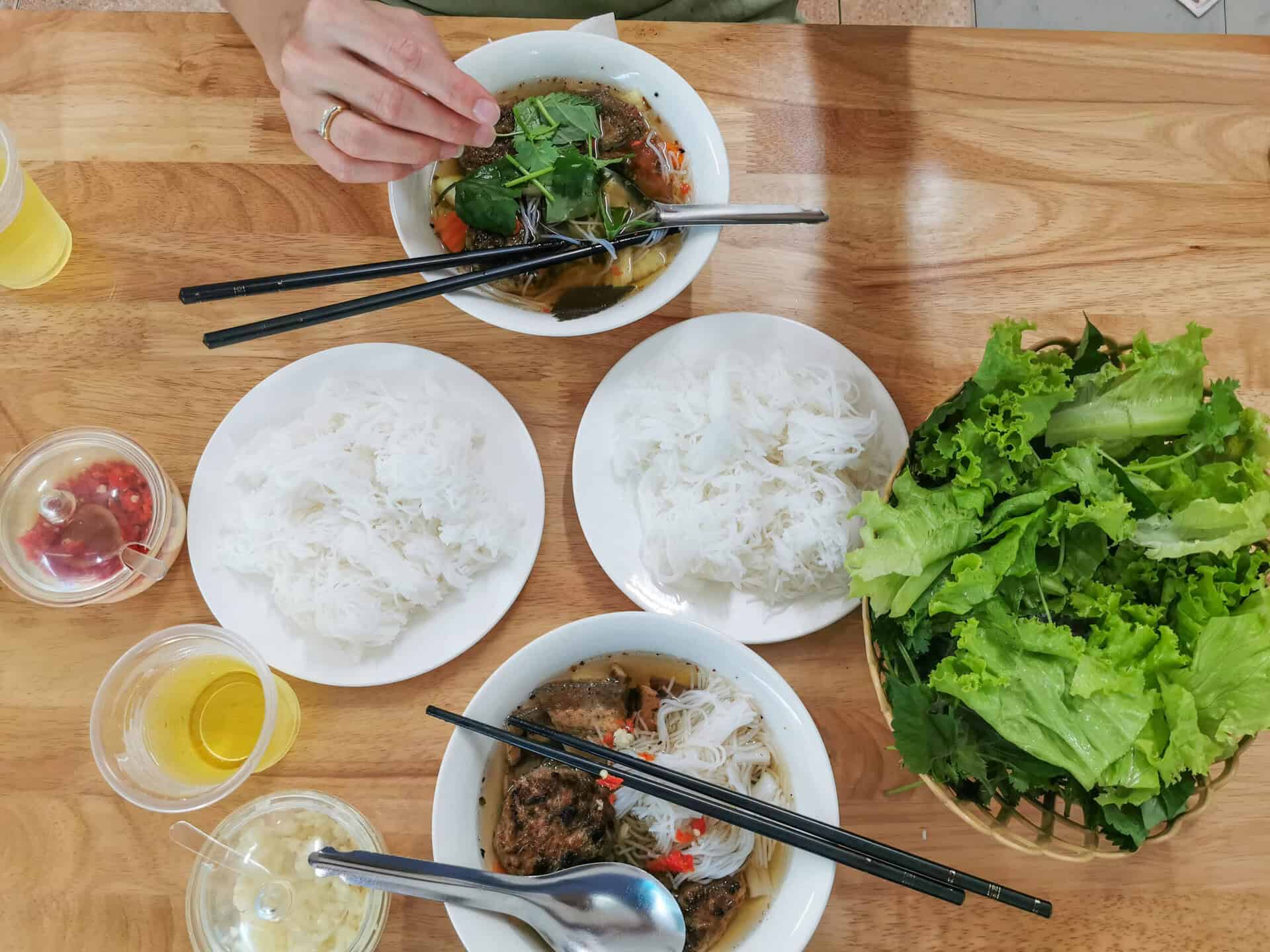
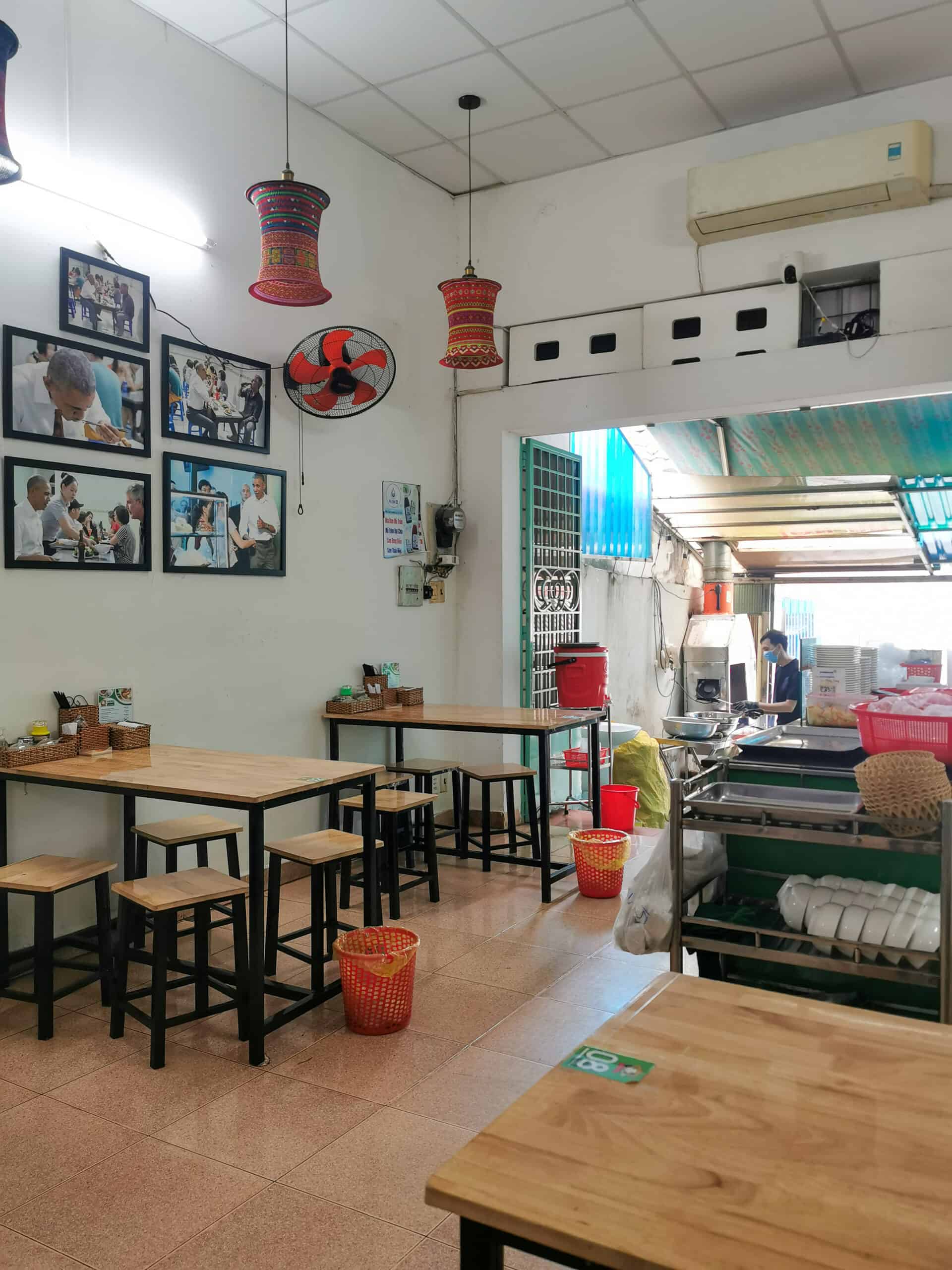
I’ve had many a bun cha in Vietnam, but my favourite is still my local joint in Thao Dien. It’s family-run, and the mum running it is always friendly and gives us a smile (the kids, not so much, lol). Their broth is the best I’ve tasted anywhere, and everything is made beautifully. It’s popular with locals and expats, and conveniently around the corner from home.
I always order the Special Grilled Pork with Rice Noodles, which comes with a spring roll too, for 75k. Just, yum.
5. BTN- Bún Thịt Nướng – a Saigon signature*
I ate this dish for ages at my local eatery without realising it was a Saigon staple. It’s found widely throughout the city, and it’s the Southern version of bun cha. I’ve probably eaten it once a week during my time here, more than any other local dish (apart from pho)! It’s got winning flavours, and it’s a great balanced lunch option. You should definitely try it.
What is bún thịt nướng?

Bun titty, as I like to call it, is a simple dish you’ll crave long after you leave. In your bowl are cold rice noodles, fresh herbs (like basil and mint), lettuce, and a spring roll, topped with succulent char-grilled pork and a few peanuts. On the side is a moreish nước chấm sauce, which you pour all over your noodz, then dig in. The sauce is slightly sweeter than bun cha, which is a common feature of southern dishes, one that I’m now addicted to. You’ll probably barely look up once as you yam this dish down.
Where to get your mouth around it 🥢
- Nem nướng Dì Hồng
14 Đường Số 38, Thao Dien – MAP

Really, you can get this dish anywhere. But I fell in love with my local version, which is just around the corner from home (and they’re on Grab!). Their one is slightly healthier as it has a grilled pork spring sausage instead of a deep-fried spring roll. They also serve nem nướng, which uses the same ingredients, but you wrap everything in lettuce or rice paper wrappers to eat it instead of yamming everything from the bowl (it was always popular with locals when we ate here).
6. Bún bò Huế – delicious aromatic soup
A few weeks before I finished school, Ms Uyen treated me to lunch she had made at home. I’d been asking about Bun Bo Hue, saying that I wanted to try it before I left Vietnam. She said she wanted me to try her version first, which set the bar high! I’ve had a taste for it since, and now so has the Sailor. It’s a delicious soup alternative to pho, and I’d highly recommend trying it when you’re in town.

What is Bún bò Huế?
Bún translates to rice noodles, bò is beef, and Huế is a city in central Vietnam. There are different versions of bún bò across the country, but Hue’s version is spicier. You can find bun bo, and bun bo hue, everywhere throughout Saigon.
My Uyen sent me the recipe for BBH, and it’s pretty involved- it takes hours to cook and has multiple steps. The beefy broth has a beautiful lemongrass flavour, with chilli for a kick, and when you squeeze a bit of lime into the dish, it has a knockout balance of tangy citrus. It’s served with round rice noodles (as opposed to pho, which is flat), and a side of herbs for you to plonk on top. Pho can be quite rich and heavy in humid Saigon, but I find bun bo fresher and more satisfying on a hot day.
Note, many versions have a pork knuckle added to it (which is also used to make the broth), so it may not be suitable for Muslims and Jewish folks. Some places may also add a dark, gelatinous cube of congealed pig blood (huyết), but just say if you don’t want it and they’ll leave it out (or, they may assume this anyway if you look Western!).
Where to get your mouth around it 🥢
- Bún Bò Huế Cầu Kiệu
99 Song Hành, Bình Trưng – MAP

I kept things local to me for this one, but Bún Bò Huế joints are everywhere in District 1 and beyond. This eatery is just across the highway from Thao Dien in District 2 and has indoor AC, which helps with the sweaty bum situation.
The broth here was delicious and aromatic, and the meat was tasty. I went for ‘The Everything’ with beef short rib, which I’d recommend. The rib had tender meat (better to use your hands with it), and the meat was thinly sliced with a very mild chew. The beef balls were yum too. Our servers were really friendly and spoke good English.

Food Tour in Ho Chi Minh City

What I love about delving into food is that it teaches you a lot about culture and its people too. In addition to conversations with our guides, we were offered the chance to visit one of the guides’ uncles at his home. I thought it might be a bit weird going into some guy’s flat, but it turned out to be a highlight for all of us. The experience was incredibly humbling, insightful and really authentic.
There are many food tours in the city; we went with XO Tours. They’re fully female-owned and run, and were awesome. Check them out here, or take a look at similar food tours on GetYourGuide. Seriously eat light that day, because you’ll be totally stuffed afterwards!
7. Bò Kho – ultimate comfort dish
Ms Uyen had family over one weekend, and she made a special bo kho. On Monday morning, she bought me a big Tupperware filled with it. Oh my god. I’ve had many beef stews in my time, but this one was amazing. I was planning to take some home for the Sailor to try, but somehow all the contents made their way inside my gob before I could stop.
What is bò kho?

Before the French invaded, cattle were mainly used for farming. Around 50-60 years later, beef became a common ingredient in Vietnamese kitchens. The French introduced other items too, like the humble baguette and carrots, which feature in this dish, as well as cooking techniques from slow-cooked meals like pot-au-feu and ragout.
However, the Vietnamese beef stew is so much more aromatic than the Western version, which now feels a bit flat to me. This is because they add lemongrass, ginger, anise and cinnamon to their sauce, and of course, it’s topped with fresh herbs. Every home cook has their own version though, and recipes with cloves or Chinese Five-spice are common.
Unlike some other beef dishes in Vietnam, the chunks in this dish should be super tender and fall apart after hours of cooking (and it’s always better the next day, like Ms Uyens). This meal also has a special condiment of salt, pepper and lemon juice to dip your meat into. It’s commonly served with a crispy baguette to soak up the sauce, or noodles.
Where to get your mouth around it 🥢
- Mặn Mòi
32 Đ. Số 11, Thao Dien – MAP (plus a branch in District 1)
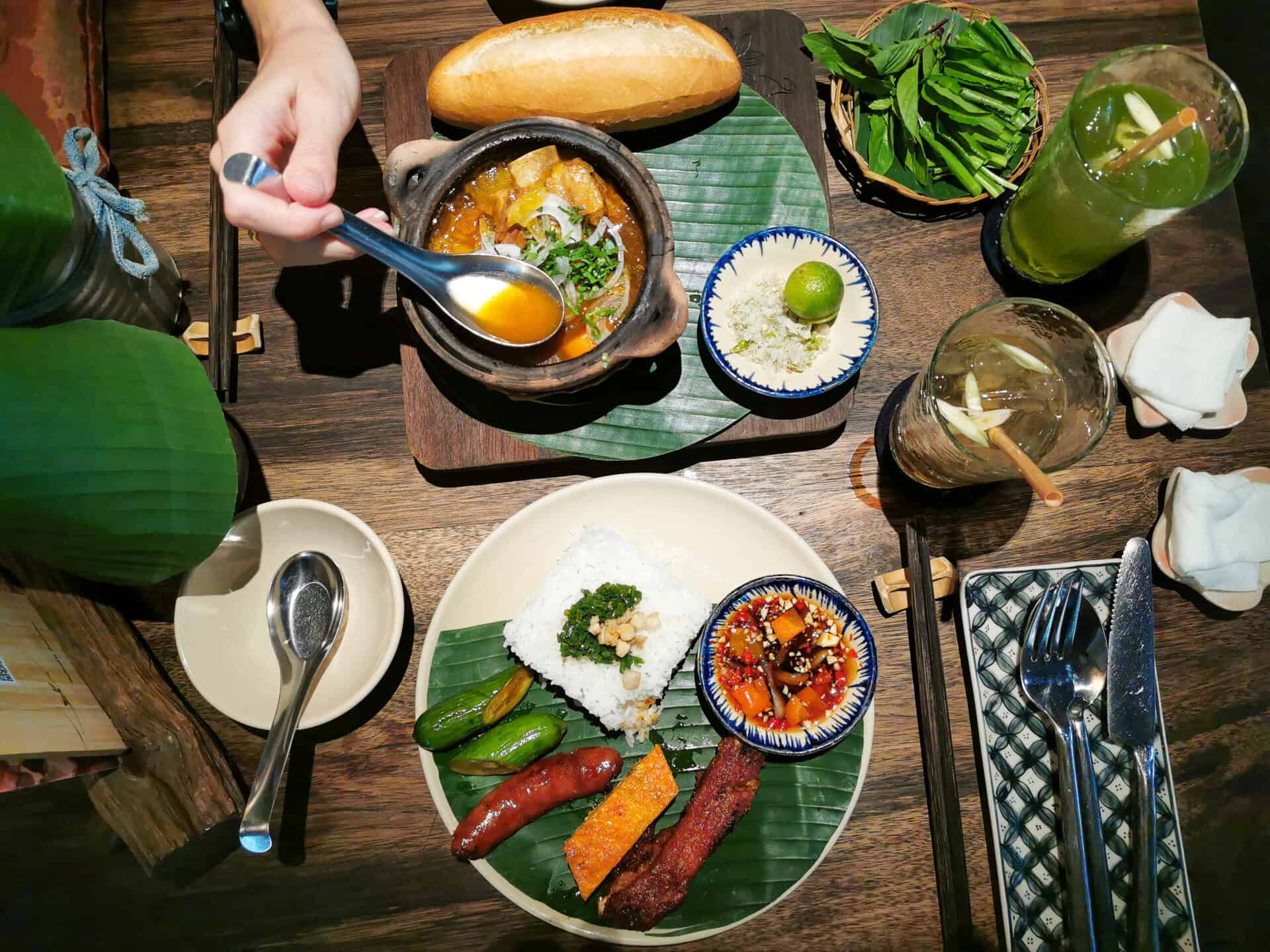
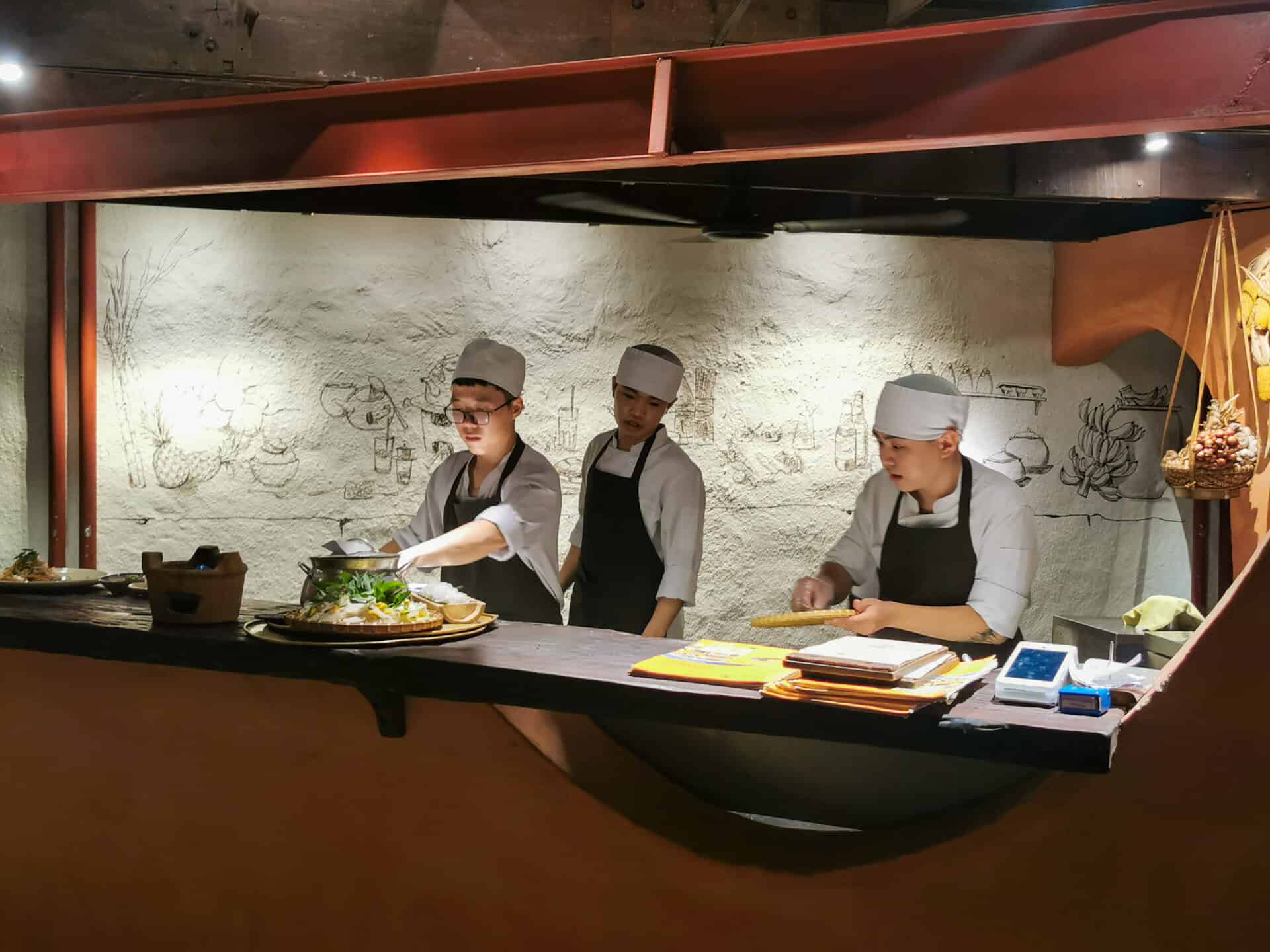
I have to admit, I didn’t find a version as good as Ms Uyen’s! But this one was tasty. Mặn Mòi was the first restaurant I ate at when I moved to Ho Chi Minh City, and I highly recommend dining here for brunch or dinner. They do their own take on Vietnamese classics, and they’re featured in the Michelin Guide. Their bo kho is only served until 3pm, and you can combine it with a cơm tấm if you want to kill two birds. (Note: they also have a lovely gift shop, and another branch in Thao Dan, District 1).
8. Bánh Canh Cua – soulful crab noodle soup
This was the first dish I tried on the XO Food Tour, and it’s delicious. As it’s heartier and more bodied than pho and bun bo hue, I’d recommend trying it for dinner. (We had the rest of the food tour to go afterwards, and I was already KO!).
What is banh chanh cua?

Banh canh is a type of thick, slurpy-as-hell noodle that’s similar to udon, except it’s made with rice flour or a rice/tapioca blend instead of wheat. Even for experienced chopstick ninjas, they can be hard to grab onto and transport to your gob before they slip away. They are the thickest noodles I’ve ever eaten, and the slightly chewy texture was very satisfying.
These noodles can be found all over Vietnam, but the cua (crab) part makes this dish very southern. Crab and shrimp are abundant in the Mekong Delta, which led to cooks pairing banh chanh with a hearty, seafood-infused pork broth. It’s now a popular street food dish you can find all over Saigon.
Where to get your mouth around it 🥢
- Bánh Canh Cua 14 ️
221 Trần Bình Trọng, District 5 – MAP

We left this place at about 7 pm, and it really started filling up with locals. The broth here is rich and delicious, and it came with sweet crab claws, shrimp, pork slices and fish cakes. I asked about the broth ingredients, but apparently it’s a secret!
9. Bánh Xèo – the king of crunch
This was one of the first local dishes I tried when I was fresh off the boat in Ho Chi Minh City. There’s a lot to love, and it’s an easy entry point to Vietnamese street food. As it’s essentially a savoury pancake, it’s a wonderful brunch option, or as it’s typically eaten here, an afternoon snack between friends.
What is banh xeo?

Born in Central Vietnam roughly 250 years ago, banh xeo didn’t become a popular Saigon street food until around the 1980s. It uses simple ingredients but, when done well, is so satisfying on many levels. The hero is the crispy batter – or “sizzling cake”, as banh xeo translates to.
In Ho Chi Minh City, banh xeo is a bit different from everywhere else. Here, it’s usually filled with prawns, sliced pork, and onions, then topped with mung beans and a generous serve of bean sprouts. The rice batter also includes coconut milk for richness and turmeric for a pop of yellow. It’s a lot larger too- the Sailor and I could easily have shared only one, as it was way too much! (But maybe okay for 2 hungry Americans).
To eat it, slice a piece of your crepe and insert it into a salad leaf. Top with the sliced pickles, herbs and chilli, then wrap it up and dip it into the delicious nuoc cham. It can get a bit messy, but it’s fun and so worth it.
Where to get your mouth around it 🥢
- Banh Xeo 46A
46A Đinh Công Tráng, District 1 – MAP

I followed the Bourdain trail for this one, and it didn’t disappoint. As they’re also in the Michelin Guide and many other publications, their prices are higher than everywhere else, which is probably why their Google reviews are on the lower side, but the food is delicious.
These guys have been operating for over 80 years (crazy!), and they still do things the traditional way by cooking on coals, which adds an extra bit of smoky flavour. The small prawnies came with their shell on for extra crunch, which I liked, but the Sailor didn’t. Although you may be able to request them shelled if you prefer.
I recommend trying their Xí Muội preserved plum drink with your meal. It’s very sour, sweet, and salty, and more of an acquired taste, but it’s worth trying something different. This joint is popular, but you should be fine getting a table, even during rush hour.
10. Bò Né – the crowdpleaser
This was another dish that was right under my nose for two years, but I only became familiar with it recently. It makes a slightly indulgent brekkie or lunch with familiar east-meets-west ingredients that will set you up for the day, and I’m sure you’ll crave it regularly.
What is bo ne?

Originating in southern Vietnam, where the French influence was stronger, bo ne is essentially a sizzling skillet of delicious marinated beef steak and eggs. It’s gained more recognition recently in the vlogger-sphere as some street food gaffs really turn the heat up, with a flare of fire as they cook it up. The dish itself translates to ‘dodging beef’ as you may have to ‘dodge’ the bits of spitting sauce when it’s put at your table, lol.
But this isn’t just steak ‘n’ eggs that you may find in France or the US. As always, the Vietnamese have elevated it into something more delicious. The juicy beef is typically marinated in soy and garlic, and the fiery cook-up gives it more flavour. It’s often served with pate and sausage, topped with coriander and onions, and a crusty baguette is served on the side to mop up the moreish pan juices. What’s not to love?
Where to get your mouth around it 🥢
- The Brix
26 Trần Ngọc Diện, Thao Dien – MAP

There are a couple of joints in the city that have become popular with foreigners because of the streetside sizzle experience, like Bo Ne Ba Nui (if you go, prepare to queue, even at 8 am). But I kept things local for this one.
The Brix is a great eatery in Thao Dien and slightly more suave (you can even pay a little extra to hang by their pool for the day if you want), although this dish is only available on Sat & Sun for weekend brunch. This bo ne was a more refined version of what you’d find on the street, and it was delicious.
Bonus dish!
11. Bánh Khọt – bite-sized babes
This dish originates from Vung Tau, which is a coastal town about 2.5 hours from Saigon. You can find decent banh khot in the city, but it’s so much better in Vung Tau! Should you go all the way there just for this dish? That’s up to you. The beaches there aren’t exactly great (like most in the south), and my stay wasn’t quite the relaxing getaway I’d intended.. it ended up being way louder than my condo in Thao Dien, and busier! Although I did come on a bank holiday weekend, which should be avoided. That said, it’s always nice to escape the city and see the ocean.
What is banh khot?

Banh khot is very similar to banh xeo in both the ingredients and how it’s eaten, but banh khot is a lot smaller. I have to say, I do think it’s even more delicious than banh xeo. I guess, good things come in small packages?
The rice cakes are cooked in a cast-iron mould, and it’s fun watching the cooks prepare them. It’s helpful to have multiple hands at the helm, as they need to work quickly. It’s usually topped with either shrimp or minced pork, and unlike banh xeo, which is crispy throughout, banh khot has a softer centre, which adds a nice textural contrast.
Where to get your mouth around it 🥢
- Bánh Khọt Cô Hai gốc Xoài
126 Cô Giang, Vũng Tàu – MAP

We really enjoyed our dish here, but seriously, you can find banh khot everywhere in Vũng Tàu. We ordered a serving of the prawn and minced pork, and it was the perfect amount for us to share between two.
* * *
As you can see, my belly was very happy in Vietnam for the past two years. I hope yours is too 😋
I’m still working off the extra kilos I put on to make this article happen! I love writing food posts, but it takes a lot of eating in the name of research (bloody tough gig, I know), and I always get hungry writing it.
If you’re wondering what happened to pho and banh mi, because I know you want to try them too (as you most definitely should), then I thought they deserved their own articles. Check out my top picks on where to find delicious banh mi in Ho Chi Minh City here, and pop back soon for my pho picks.
I’ll also be writing up my favourite restaurants, so peek back for that too!
If this post helped you get a happy belly, don’t be a stranger… drop a line to tell me about your favourite dish.x

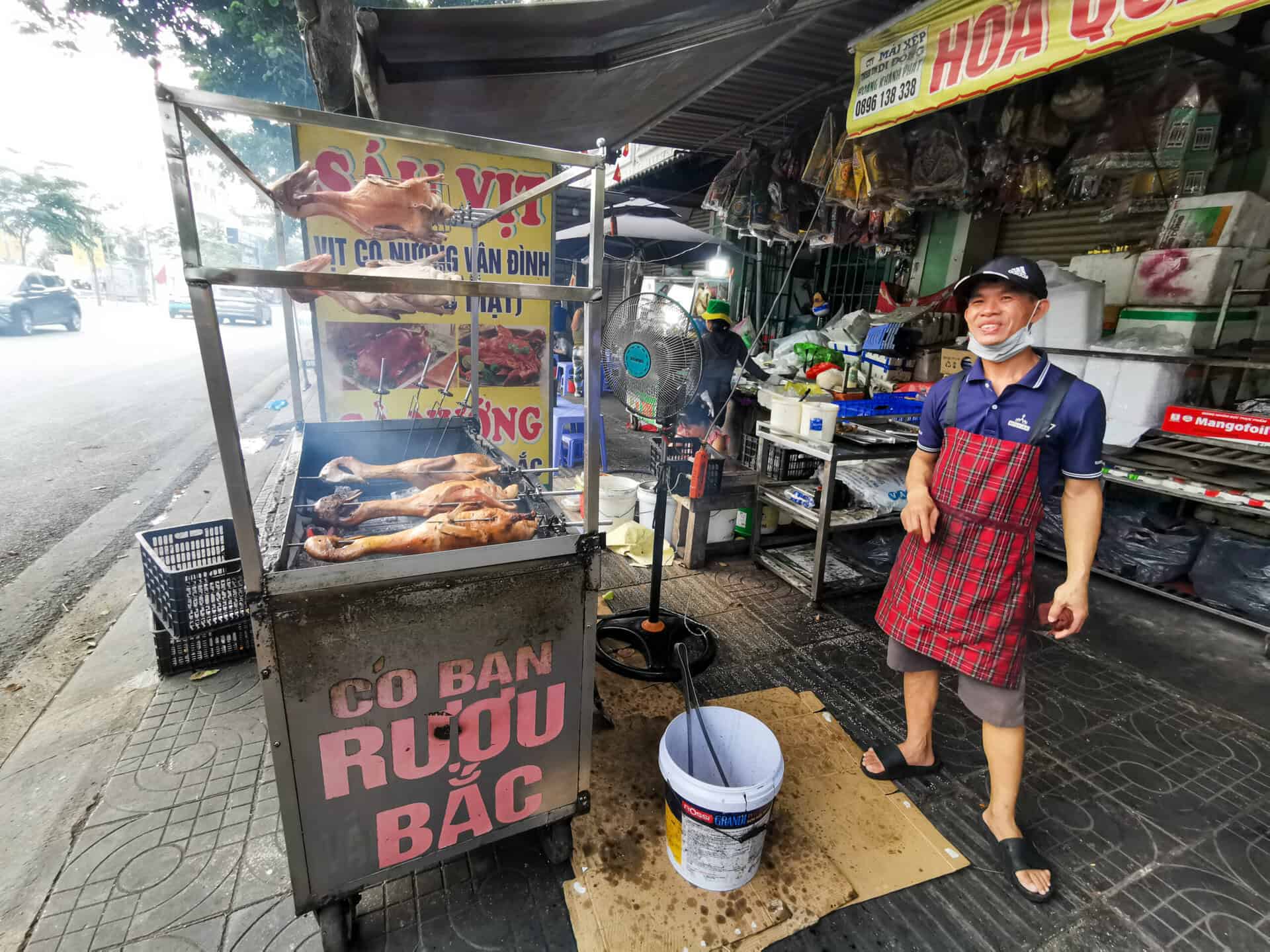
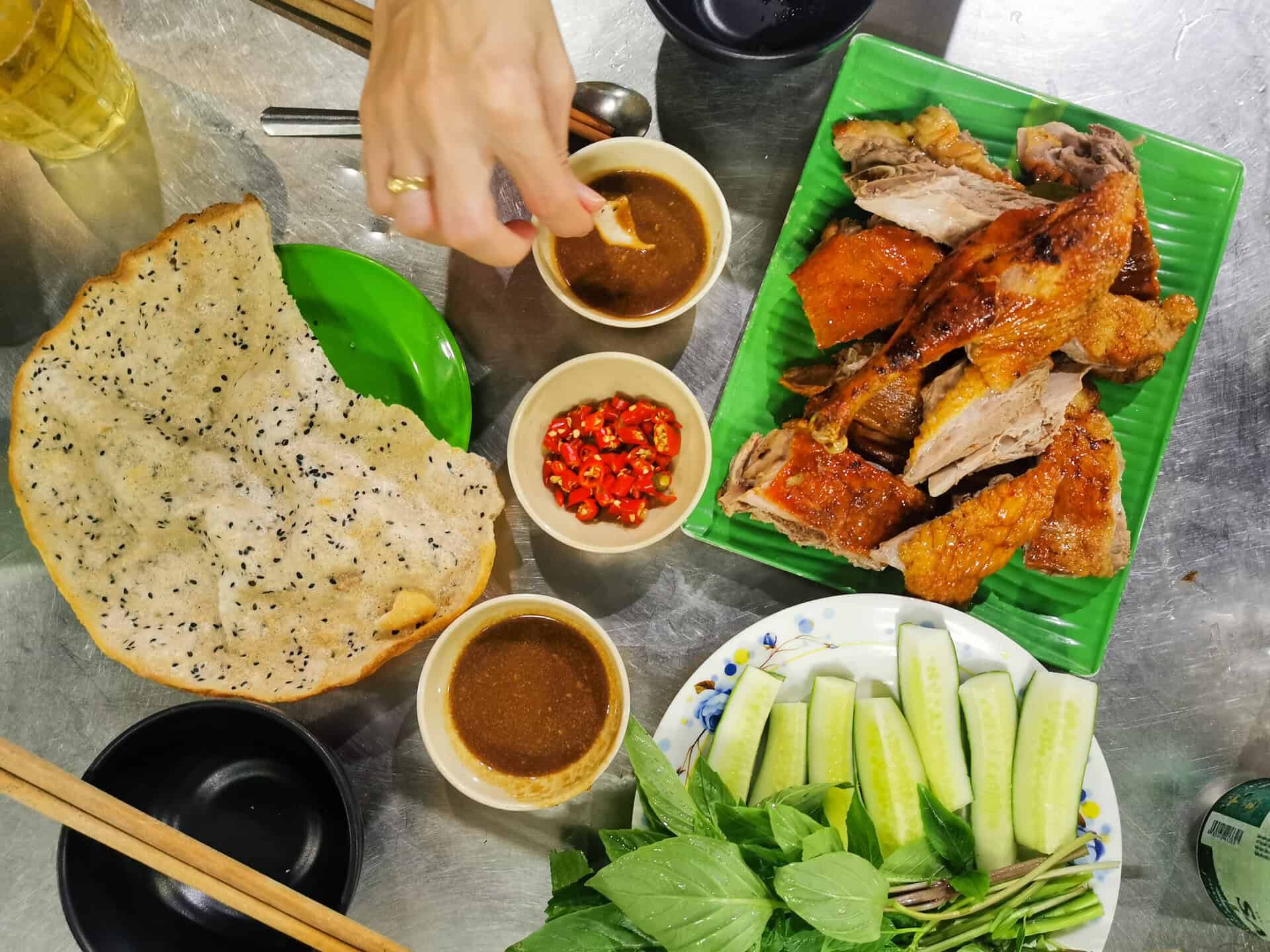
Here are some features that I think make Vietnamese special. In contrast to Thai food, which is usually really slap-in-the-face punchy and spicy, Vietnamese food is generally less chilli-forward and bam-pow, perhaps you could say subtler. It’s still incredibly flavoursome, but I think the reduction of chilli makes it more accessible to those who are less tolerant (ie. westerners), although in my case, more is more. 🌶️😋 However, customising each meal to your taste with condiments is very common in Vietnam, and chilli is always available at the table. You may be given a simple layer of cracked pepper and a squeeze of comquat juice in a ramakin to jazz up your seafood. Or a well-balanced garlicky/spicy/salty/sweet/umami nuoc cham (sweetened fish sauce) as a dip or dressing will make your taste buds sing like Mary Poppins. I love the generosity of herbs here. They’re often served piled high on a plate or in a basket, with a range of varieties and flavours, to be added generously to your meal. Sometimes it’s the vehicle used to stuff everything into, which gives everything a huge pop of freshness and crunch. You’ll rarely eat anything without the green stuff. I’ve been introduced to many local ‘erbs I’ve never even heard of before, like sawleaf and rice paddy herb, which are frequently offered with pho, or the heart-shaped ‘fish mint’. Word of warning– this pungent leaf is like Marmite. It’s widely added to herb platters in Southern Vietnam, and I can smell it as soon as it arrives at the table. There’s nothing else I can say I hate eating! The Sailor hated it too, but surprisingly, many of my friends didn’t mind it. Anyway, you have been warned. I’ve found the Vietnamese to be very playful with textures. My favourites are the most satisfyingly crunchy crepe, delicate silken pancakes, and chubby, viscous noodles. Some things may test your textural boundaries, and may never cross over into the divine pleasure phase. For me, that was eating super tough meat! Not all of it was like that, but sometimes it made food inedible. The locals, however, love a good chew. In Thao Dien recently, we finally got to try Duck Man’s rotisserie. We’d been meaning to try it for two years, as it always smelled amazing cooking over the open coals. The table next to us was having a blast pulling and ripping the bird apart with their teeth like it was Tết. The meal was super tasty and fresh, but we had to discard most of the duck because it was so chewy we couldn’t even rip the meat off! This was to the amusement of a lady walking past, who, after asking for money, stood there for about 1 minute, looking at us and the discarded plate in disbelief, said a few words in Vietnamese, then laughed. lol. Pho was still my soup of choice when I moved here, and usually a twice-weekly affair. I craved the stuff whenever I returned from holiday, in the evenings, and when I was sick. It’s just so freaking delicious (I had kids in my class who ate it every single lunchtime without fail too). But Vietnam’s soup game doesn’t end there- they love a good hot bowl of broth and noodles. The two in this list are delicious and easier for Western palates, but there were many more I didn’t get around to trying, like bún riêu. For those of you new to Southeast Asia, I know some of you may be worried about potential food poisoning. I completely get it. No one wants Bali belly or Saigon sh*ts, especially on holiday. And there are cases that pop up in the city when hygiene slips, like salmonella. Last year there was a banh mi chain that was linked to the hospitalisation of 300 people, which occurred from spoiled pâté. If you’re unsure about a particular place, where you can, try to eat at busy joints. Ones with a high turnover should have fresher ingredients as they haven’t had time to go bad in the muggy heat. And if in doubt, leave it out. I’ve lived in SE Asia for 6 years and never had gastro here. As far as I know, none of my friends got it from eating street food here either. The first time I ever got it was last year, in Europe! And what I ate tasted a bit iffy. When I lived in Malaysia, I massively regretted not trying more street food. I missed out on a lot, so I made sure I didn’t do the same in Vietnam. Most of the best traditional foods here are found at casual hole-in-the-walls with plastic chairs, or humble street carts. Some of them are generations old and will look unassuming, but you’ll probably eat some of the best food of your life in them. So please don’t be put off by their simple look, or find them intimidating because they’re different to what you’re used to back home, or because you think the staff may not speak English (Google Translate is your best pal!). It’d be a missed opportunity to come all the way here and not get your squat on, pull up a plastic stool and order local. Trust me, you won’t regret it.FAQs
What makes Vietnamese food unique?
Customising with condiments.
Herbage game.

Textures.

A hearty soup.
Is it safe to eat street food in Ho Chi Minh City?


Plan Your Saigon Trip
Saigon can be quite overwhelming to navigate for newbies! If you’re an out-of-towner, here are some tips for your visit.
Where to stay
Most of the best local eateries and activities in Ho Chi Minh City are in District 1. If I were just here for a few days, this is where you’ll soak up the most authentic vibes. It’s chaotic, but fine for a short while (vs living here!).
As the city is hot and sticky all year (with only a mild respite in December and January), a pool would be appreciated to take the edge off. Although, do bear in mind that Saigon has a fair amount of smoggy days, so blue skies and sunshine are often overtaken by grey.
Here are my top picks for hotels in D1:
- Best Budget stay – Leiden Homestay & Cafe: This cute homestay has light, stylish, and spacious rooms (starting at 30 m²). Although there’s no pool, I like that it’s not in a high-rise.
- Best Mid-Range hotel – Silverland Mây Hotel: A gorgeous boutique stay with the added perk of a rooftop pool, gym, spa and sauna.
- Best luxury stay – The Auberg Collection Hotel: For something a little special, this place only opened earlier this year, hence the lack of reviews. The whole place is beautifully styled in quiet luxury meets contemporary Vietnamese. Facilities include an onsen hot spring bath, sauna, gym and indoor pool to melt into. (The banh cuon and com tam place is just around the corner too 😋).
Thao Dien

If you’d prefer to be away from the main humdrum, I’d recommend hanging out in my burb of Thao Dien. It’s not exactly peaceful like Primrose Hill (this is HCMC!), but it’s much more chilled than D1. Whenever I had a chaotic day in the city, I was always thankful to come back to the Den.
Thao Dien is only 15 minutes away from D1 and is hugged by the river, so there’s some decent spots to hang with views of Landmark 81. Generally, the further you travel away from the highway, the more peaceful it gets.
Accom-wise, there’s a mix of high-rise condos with great Airbnb’s, and low-rise stays in more charming, traditional buildings – although, you need to be careful with the location as the sound travels a lot up the narrow streets. The higher the floor, the quieter it’ll be.
Tip: try not to stay on the first stretch of Quoc Huong Street (by the highway, just before Xuan Thuy Street). I lived there for 2 years and apart from being noisy, it’s a really chaotic stretch to walk around.
Here are my top picks for Thao Dien stays:
- Best Budget stay – Nexus House: Perched in a quieter end of Thao Dien, with comfy rooms and leafy views. (It’s also close to a great little riverfront coffee shop, Hong Cafe, and one of my favourite spas, Hygge).
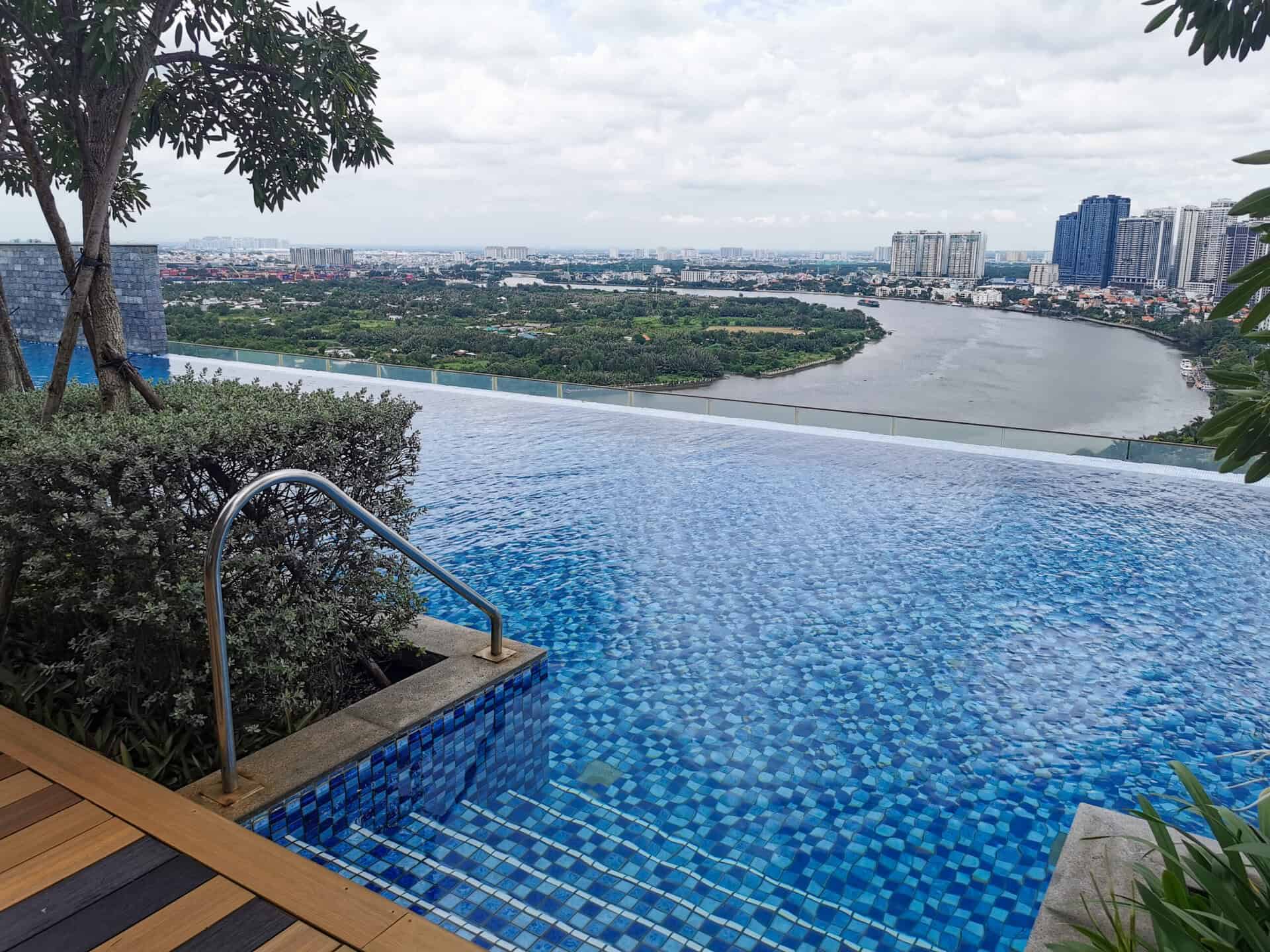
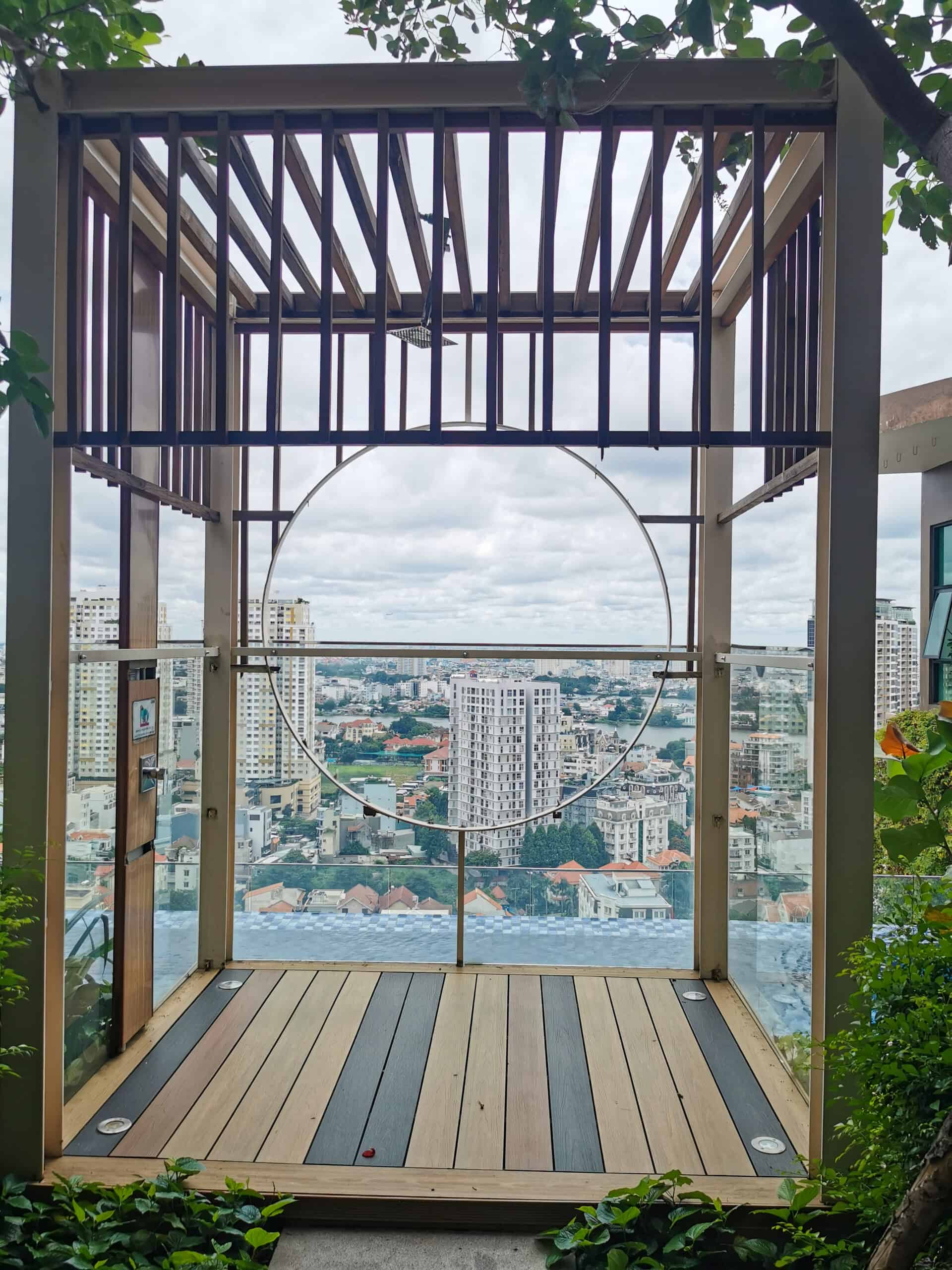
- Best Mid-Range Airbnb – D’Edge: I really wanted to live at d’Edge! The facilities are what sold it to me- a scenic rooftop pool, steam and sauna, and a very large and well-kitted gym that’s better than any hotel I’ve stayed at. There are a few Airbnbs here, but I’d choose this one on the 21st floor, or one of Tin’s apartments.
- Best affordable luxury – Amanaki: I could see this place from my bedroom and always wanted to be here instead! Amanaki is a beautifully styled, arty, boutique hotel with all the perks (indoor pool, spa, sauna, gym). You’re within walking distance of everything, but it’s nicely tucked away on a quiet road, despite being close to the highway. (Check out La Sen Spa or Mac Huong Wellness around the corner for an awesome massage).
Getting Around
The easiest way to get around is via Grab (Asia’s Uber equivalent). Due to high traffic at peak hours, a bike will get you anywhere quicker (and it can be fun). Although sometimes you get a driver who isn’t the safest, requiring you to grab on for dear life (maybe that’s where they got their name!). To the amusement of my friends, I always got a taxi for a few reasons- I found it safer, to avoid the smog and humidity/helmet hair (lol). For short trips, the price difference is also small, and most trips are only a few dollars.
After 10 years in the making, Saigon finally got its first train line in 2025 (it was supposed to take 5). It’s still quite limited as it’s only one line, but it’s an easy option if you’re going between Thao Dien and parts of District 1. You don’t need a physical ticket, you can just tap your ATM card at the gate. Otherwise, download the HCMC Metro HURC app to buy single- or multi-day passes.

Stay Connected
Organising an eSIM before you travel to Vietnam would be the easiest. If your phone supports it (mine’s a dinosaur unfortunately!), I’d go with Saily. I’ve partnered with them because they’re part of Nord Security (whose VPN I’ve used for years as an expat), and unlike other providers, they include built-in virtual location protection, an ad blocker, and web security.
Otherwise, if your phone is incompatible, I’d recommend getting a local SIM with VinaPhone over MobiFone. Coverage is the same, and both apps are in Vietnamese, but topping up with VinaPhone was a lot easier. With MobiFone, the interface was confusing and a monthly frustration.
Data That Won't Drain Your Banh Mi Budget
One eSIM for all your trips, with an easy-to-use app for a fraction of the usual roaming costs.
Get 10% off your Saily eSIM with coupon code MERMAID. (The button below applies your discount at checkout.)
